- The Life Larder
- Posts
- What Are Herbicides Doing in Our Daily Bread?
What Are Herbicides Doing in Our Daily Bread?
There's more to our carbs than we think.

Sam Ratanji
January 25, 2026
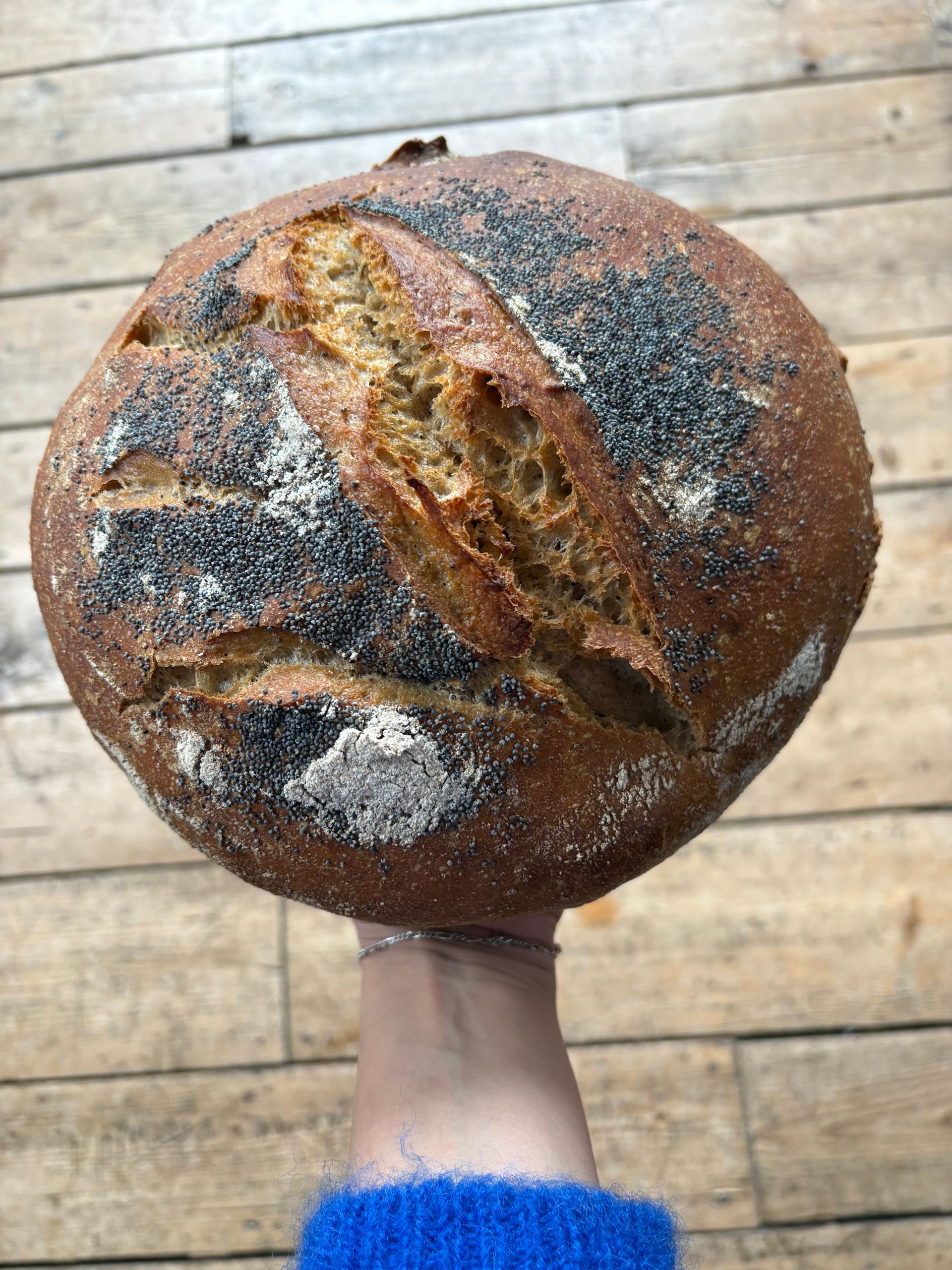
Red wheat sourdough, home baked.
A very good friend of mine always talks about doing hard yet hopeful things. I think January is a perfect encapsulation of this – more dark than light, resolutions and wishes we try to make good on when the year feels fresh.
It also perfectly encapsulates how I felt after ORFC – the Oxford Real Farming Conference – a couple of weeks back. Always at the beginning of January, it sets the tone for challenges in food and farming by people fighting for better – and shows how we can move forwards. It is also a stone’s throw from the OFC – Oxford Farming Conference, which happens at the same time in the same city, though this is more governmental and big-business-led (and also happened to be protested outside by a brigade of farmers on their tractors!).
The real reason I wanted to write to you this week was to share learnings from one of the talks I went to there; but I have to say it felt more hard than hopeful. The Guardian published a great piece with some of the points I wanted to make – focusing on glyphosate (a weedkiller used widely in farming since the 90s) and the latest studies showing that this carcinogenic chemical is not only being used in our playgrounds, but is also now being independently linked, via studies from academics including Prof Michael Antoniou of King’s College London, to abnormal increases in non-alcoholic fatty liver disease in young people, kidney disease, and cancers including leukemia. At a more general level, glyphosate in our diets and lives can also be a trigger for gut inflammation.
The points that really brought this home for me were that around 50% of non-organic bread products contain glyphosate (though UK supply chain standards have been driving down the use of it in the food we eat), and that some regenerative farmers still use it on their crops (most though are aiming to reduce it). For organic farmers - glyphosate isn’t allowed. So that premium supermarket loaf you’re buying? Potentially.
Now, this is all pretty rough, right? We’re a nation of bread lovers – over 95% of UK homes have bread in their weekly basket. We’re also a nation great at growing cereals – 72% of arable land is used to grow cereal crops. And in all of this, there is an opportunity for change, a glimmer of floury hope. There are, of course, our organic farmers (and others too!) who won’t use this chemical on their crops. There is also a tide of growers and farmers looking for a new way – whether through regenerative methods (where many are reducing glyphosate use), or through a need to change the system because of crop resistance (our plants are getting smart and aren’t doing what the chemicals want them to do). Simply put, ‘nature overcomes everything we do’. So perhaps the hardest but most hopeful thing is to work with nature again?
As consumers, this can look like asking questions of our local bakers – learning more about where their flour comes from and buying bread as a stand for our health and soil quality. The more we buy it, the more demand grows, and the quicker we can change the system. One slice at a time.
Here’s some ways you can work with me 👇
🔪 Private Cheffing & Retreats – Bespoke menus that nourish, fuel, and taste incredible. Whether it’s an intimate dinner, a wellness retreat, or high-performance nutrition, I bring the flavour and the science.
📢 Speaking & Workshops – From corporate wellness to food sustainability, I deliver engaging, no-fluff talks that connect the dots between soil health, nutrition, and better living.
📦 Brand Consulting – Helping food brands create products that are as good for people as they are for the planet. Strategy, product development, and nutrition-led storytelling.
📝 Writing & Editorial – As a Guild of Food Writers member, I contribute to leading publications on all things food, health, and sustainability.
📩 Interested? Say hello at [email protected]